Albertans vote Monday, Oct. 19, 2026, in the province's first referendum on separation from Canada. Polls close at 8 p.m. Mountain Time (10 p.m. ET), and Elections Alberta will count the remain-or-separate question before anything else. The Alberta independence referendum is nonbinding. Every public poll published during the campaign shows the remain side well ahead.
The question does not ask voters to approve independence directly. It asks whether Alberta should stay a province or whether the provincial government should begin the constitutional process that would come before a second, binding vote on leaving Canada, according to a Reuters explainer.
Washington is watching. Canada is the largest foreign supplier of crude oil to the United States, and senior Trump administration officials have weighed in on Alberta separatism.
Key Facts
-
When: Monday, Oct. 19, 2026. Polls close at 8 p.m. MT (10 p.m. ET), and results for the separation question are expected late Monday night or early Tuesday, Oct. 20.
-
Where: Alberta, Canada. Just over 1,400 polling stations will open on referendum day.
-
What: Question 10 of 10 on the ballot. Voters choose between Alberta remaining "a province of Canada" and the government beginning the "legal process required under the Canadian Constitution" toward a binding separation referendum.
-
Who: Premier Danielle Smith's United Conservative Party government called the vote. Thomas Lukaszuk's Forever Canadian campaign is among the remain groups, and the Alberta Prosperity Project is among those backing separation.
-
Status: The result is nonbinding under the provincial order in council that set the vote, according to Elections Alberta.
-
Polling: The Writ's tracker average is 67% remain and 27% for starting the separation process.
-
Turnout signals: About 658,000 mail-in ballots were requested, a record, and officials expect turnout of 80% to 85%.
What Happened
The path to Monday's vote began with competing citizen petitions. Critics accuse the Smith government of halving the signature threshold for citizen-initiated referendums, according to a Reuters explainer. The separatist group Stay Free Alberta submitted a petition that it said carried more than 300,000 signatures, Reuters reported. A rival petition led by former deputy premier Thomas Lukaszuk gathered more than 400,000 signatures for staying in Canada.
In mid-May, a judge sided with a First Nations challenge and halted the separatist petition. The court ruled that affected Indigenous peoples should have been consulted before separatists collected signatures, Reuters reported, and Alberta has appealed. Days later, on Thursday, May 21, Smith said in a televised address that the province would hold a vote in October anyway.
"It's time to have a vote, understand the will of Albertans on this subject, and move on," Smith said in that address, according to Reuters. Jeff Rath of Stay Free Alberta called the question "a referendum on having a referendum."
Lukaszuk launched a provincewide "Unity Bus" tour on May 23. "This is definitely the most important vote in the history of this province," he told supporters, according to The Canadian Press.
The final ballot has 10 colour-coded questions. Nine are yes-or-no questions on immigration, provincial services and voter identification, and Question 10 is the only choice question, Elections Alberta says. Advance voting opened Tuesday, Oct. 13, at 310 locations, CP24 reported. An Elections Alberta spokesperson said more than 174,000 people voted on the first day and more than 180,000 on the second, according to Reuters. Smith said she voted to remain during advance polling.
Timeline
| Date/Time (ET) | Event |
|---|---|
| August 1998 | Supreme Court of Canada issues Reference re Secession of Quebec |
| 2000 | Parliament passes the Clarity Act |
| Jan. 22, 2026 | U.S. Treasury Secretary Scott Bessent calls Alberta "a natural partner for the U.S." |
| Late Jan. 2026 | Financial Times reports separatist meetings with State Department officials |
| Mid-May 2026 | Alberta court halts separatist petition over lack of First Nations consultation |
| May 21, 2026 (evening) | Smith announces October remain-or-separate vote |
| Oct. 12, 2026 | Carney releases Thanksgiving unity message filmed in Edmonton |
| Oct. 13, 2026 | Advance voting opens at 310 locations |
| Oct. 19, 2026, 10 p.m. ET | Polls close; Question 10 count begins |
| Oct. 20-21, 2026 | Unofficial count for all 10 questions due within 48 hours |
Who's Involved
Premier Danielle Smith called the vote and says she voted to remain. Reuters reported she has pledged to respect the result and quickly start the binding-referendum process if separation wins.
Prime Minister Mark Carney, who was largely raised in Alberta, has campaigned for unity. In an Oct. 12 Thanksgiving message filmed at his former Edmonton high school, he said, "We can't build big things on fault lines," Al Jazeera reported. He has also said "the best place for Alberta is in Canada," according to Reuters.
Remain campaigners include Forever Canadian (Lukaszuk), Forward Canada, Lead Not Leave and Vote to Stay, whose organizers include former Premier Jason Kenney, according to a who's-who compiled by Alberta political writer Dave Cournoyer.
Separation-side groups include the Alberta Prosperity Project, led by CEO Mitch Sylvestre with lawyer Jeff Rath, the same tracker lists.
First Nations leaders object on treaty grounds. After an emergency meeting of Treaty 6, 7 and 8 chiefs in 2025, Piikani Chief Troy Knowlton said, "We are not going anywhere," APTN News reported.
The Ground Picture
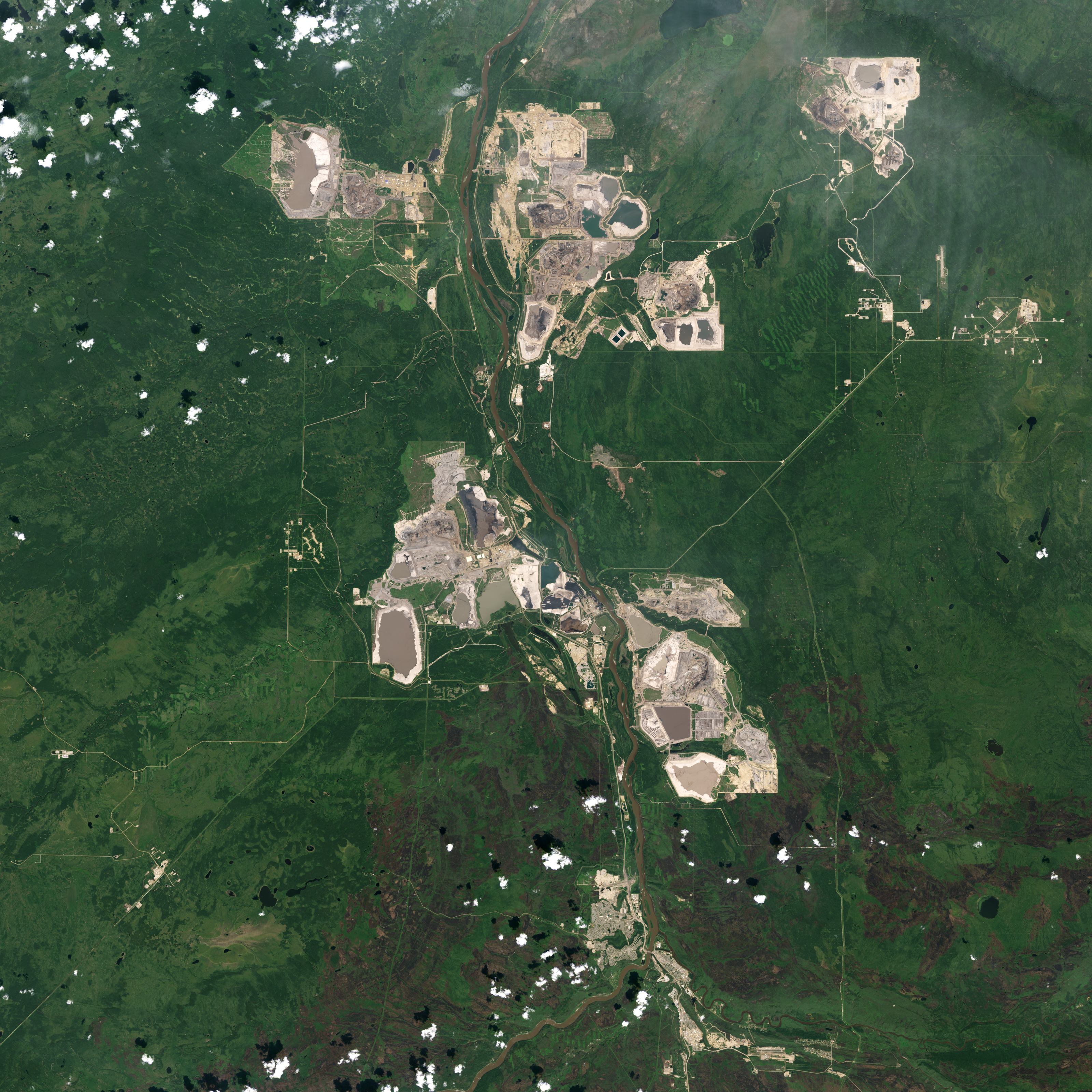
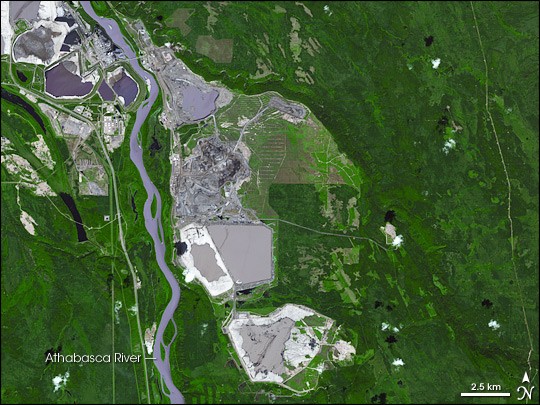
Alberta's leverage is oil. The province produced 83.8% of Canada's crude oil and equivalents in 2025, when national output hit a record 5.35 million barrels per day, according to the Canada Energy Regulator. The province is landlocked. Its crude reaches tidewater only by crossing British Columbia, including through the Trans Mountain Expansion pipeline that started up in May 2024, or by moving south into the United States.
Geopolitical Players
Canada's legal framework. In its 1998 Quebec secession reference, the Supreme Court of Canada ruled that a province cannot leave unilaterally. The court said secession would require a constitutional amendment, which "perforce requires negotiation," according to a summary from the Centre for Constitutional Studies. It also said a clear majority on a clear question would create a duty for all parties to negotiate. Parliament put that ruling into law as the Clarity Act, which requires a clear majority but sets no numeric threshold, according to Reuters.
United States. Treasury Secretary Scott Bessent said on Jan. 22 that "Alberta's a natural partner for the U.S.," The Canadian Press reported. The Financial Times reported that Alberta Prosperity Project leaders met State Department officials at least three times. U.S. officials told the paper that "no support or commitments were conveyed," Al Jazeera reported. Carney responded that he expects Washington "to respect Canadian sovereignty." President Donald Trump has repeatedly called for Canada to become the "51st state." Ecker Geopolitics could not find a Trump statement on the Oct. 19 vote itself.
Foreign-influence claims. A Globe and Mail investigation reported that U.S. Republican operatives met separatist organizers, and that separatist leaders discussed offering access to Alberta's water and oil royalties in exchange for U.S. support, Al Jazeera reported. Separatist leaders dispute those claims.
Quebec. The Parti Québécois recently won Quebec's provincial election and has pledged a third sovereignty referendum, but only after Trump leaves office and if it holds a majority, Reuters reported.
What It Means for the United States
The following is Ecker Geopolitics analysis. In 2025 the United States imported about 3.9 million barrels per day of crude from Canada, its primary source, according to the U.S. Energy Information Administration. Crude made up 69% of the estimated $137 billion in U.S.-Canada energy trade that year. Most of that oil starts in Alberta. With the Middle East supply shock showing in the jump in U.S. producer prices and in Iran's attacks on Strait of Hormuz shipping, steady supply from the north is a strategic asset for the United States.
Benefits and opportunities
-
Heavy Alberta crude reaches U.S. refineries by pipeline, without passing through any maritime chokepoint. That supply holds steady whichever way the vote goes.
-
A strong separatist showing could give Washington more leverage in energy and tariff talks with Ottawa.
Risks and dangers
-
A narrow result, or a surprise win for separation, could start years of constitutional uncertainty over the source of the largest share of U.S. crude imports.
-
Comments by senior U.S. officials have fed Canadian accusations of American interference. That could harden Ottawa's position in trade disputes and push Canada toward non-U.S. export routes such as Trans Mountain.
-
First Nations treaty claims and Canadian court rulings mean that no breakup would be quick or orderly, which is a risk for U.S. investors with assets in Alberta.
Get the full Intel Briefing. Pro Truth Seeker members get members-only deep dives on North American energy security, the daily Intel Briefing and the full archive. Become a member.
What's Next
Polls close at 10 p.m. ET Monday. Early Question 10 results should follow, with the final count expected early Tuesday, Oct. 20, Global News reported. Elections Alberta must finish the unofficial count of all 10 questions within 48 hours.
Recent polls show remain ahead. Leger's Oct. 2-4 survey had 70% for remain and 22% for the separation process, according to Leger. Angus Reid's Oct. 13-15 poll found 66% to 34%, the institute reported. The Writ's average was 67% to 27% as of Oct. 16, according to the tracker.
Few Albertans expect Monday's vote to settle the issue. In the same Angus Reid survey, 62% agreed that "there will never be an end to the separatist movement in Alberta." The province's appeal of the petition ruling is still before the courts.
Watch Ecker Geopolitics for live results analysis Monday night, subscribe to the Ecker Dispatch, and cast your vote in today's poll.
Sources
-
Elections Alberta: 2026 Referendum, accessed October 17, 2026
-
Reuters (via 93.3 The Drive): Explainer - What does Alberta's referendum on separation from Canada mean?, October 15, 2026
-
Reuters (via CTV News): What does Alberta's referendum on separation from Canada mean?, October 15, 2026
-
Reuters (via BOE Report): Alberta government will hold non-binding referendum on staying in Canada, premier says, May 22, 2026
-
Angus Reid Institute: Remain continues to lead by a wide margin, but few believe separation issue will end on Oct. 19, October 16, 2026
-
Leger: Alberta Referendum October 2026, October 2026
-
The Writ: Alberta referendum poll tracker, October 16, 2026
-
Al Jazeera: Canada's Carney calls for unity as Alberta prepares for secession vote, October 12, 2026
-
Al Jazeera: Are Trump officials driving Alberta's separatist movement in Canada?, January 30, 2026
-
The Canadian Press (via Castanet): Bessent weighs in on Alberta separatism, calls Alberta 'natural partner for the U.S.', January 23, 2026
-
APTN News: 'There is no path to separation': Chiefs tell Alberta premier such talk is insanity, May 7, 2025
-
Global News: What Albertans can expect when they go to vote, October 11, 2026
-
CP24: More than 300 advance polls open across Alberta in historic referendum on separation, October 13, 2026
-
Global News: Forever Canadian group launches provincewide unity bus campaign, May 24, 2026
-
Daveberta: Tracking who's who in the Alberta separation referendum debate, July 14, 2026
-
Justice Laws Website: Clarity Act (S.C. 2000, c. 26), accessed October 17, 2026
-
Centre for Constitutional Studies: Reference re Secession of Quebec, July 4, 2019
-
U.S. Energy Information Administration: Lower crude oil prices reduced U.S.-Canada energy trade value in 2025, July 29, 2026
-
Canada Energy Regulator: Canada sets new record in crude oil production in 2025, June 17, 2026
-
NASA Earth Observatory: Athabasca Oil Sands, World of Change, accessed October 17, 2026
-
NASA Earth Observatory: Millennium Open Pit Mine, Alberta, December 6, 2007