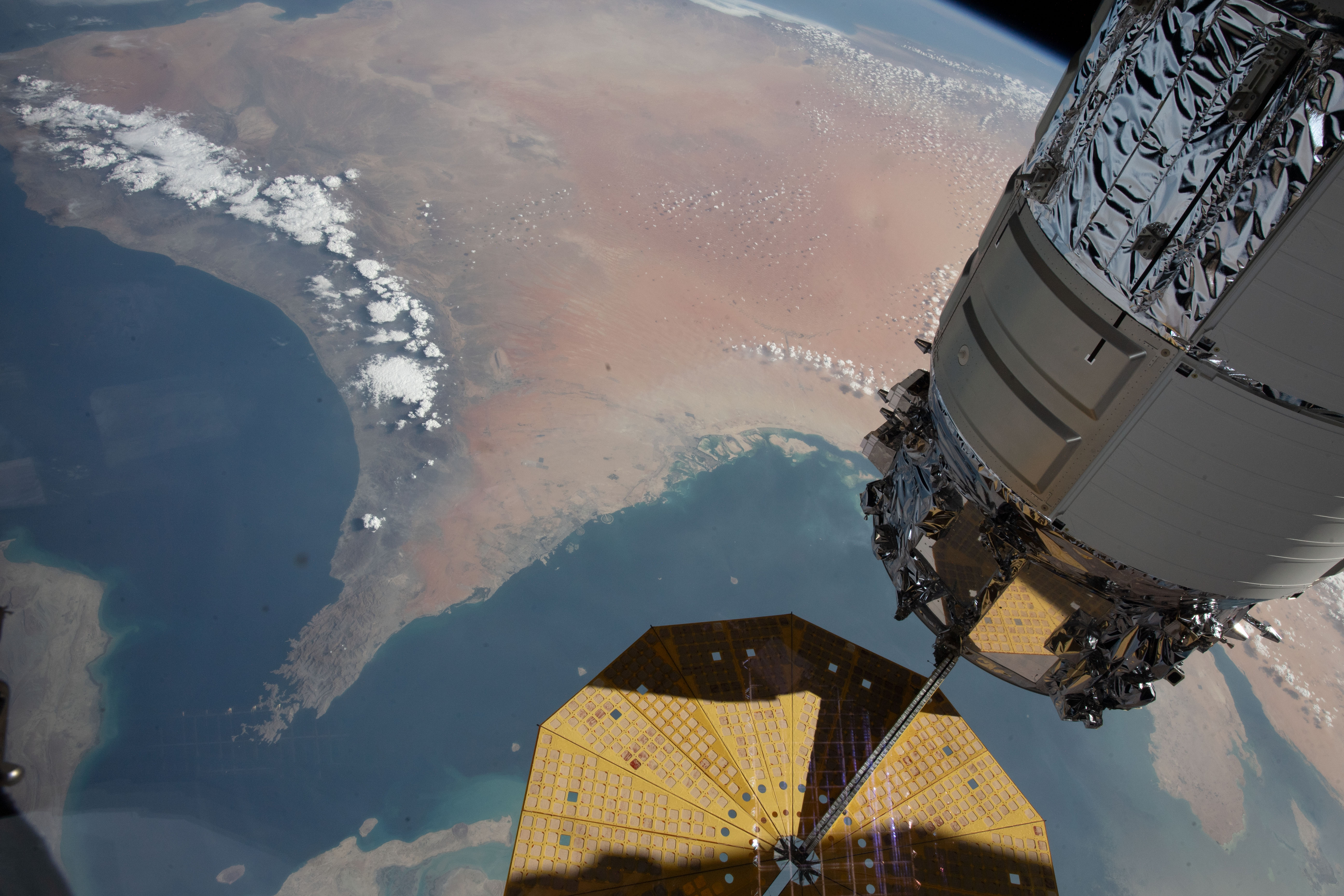
Iran and Qatar have drawn up a proposal to reopen the Strait of Hormuz within two days if Washington meets Tehran's conditions, Iranian Foreign Minister Abbas Araghchi said on Saturday, Oct. 31, in remarks to Al Jazeera that were widely reported by early Sunday, Nov. 1 (about 1:20 a.m. ET, when ANI moved its report from Tehran).
The offer follows a letter from Vice President JD Vance to Iran's top security official, delivered through Qatari mediators, which Tehran says marked a change in Washington's tone. It also lands two days before the U.S. midterm elections, after which U.S. and allied officials have said strike options against Iran will go to President Donald Trump.
No U.S. official has accepted Iran's conditions. Secretary of State Marco Rubio said on Saturday that talks "have actually never stopped" but declined to give any timeline, according to the State Department transcript. This is a follow-up to Ecker Geopolitics' report on the limpet-mine attack on the tanker Louise 1.
Key Facts
- When: Araghchi's remarks were made Saturday, Oct. 31, 2026; reports circulated through early Sunday, Nov. 1 (ET).
- Where: Tehran and Doha, Qatar; the waterway in question is the Strait of Hormuz between Iran and Oman's Musandam Peninsula.
- Who: Iranian Foreign Minister Abbas Araghchi; Supreme National Security Council Secretary Mohsen Rezaei; U.S. Vice President JD Vance; Secretary of State Marco Rubio; Qatari mediators.
- What: Iran and Qatar propose cutting the implementation period for reopening Hormuz from a previously discussed five-to-seven days to two days, conditional on U.S. concessions.
- Iran's conditions: Lifting post-Islamabad-memorandum sanctions, fewer U.S. forces in the region, restored oil waivers, release of frozen funds and recognition of an Oman-agreed shipping route.
- Status: Developing. No U.S. acceptance; no direct U.S.-Iran meeting scheduled.
- Key numbers: UKMTO logged just over 30 reported attacks on shipping in October, the most of any month of the war, and 145 incidents since Feb. 28, per HNGN.
What Happened
Araghchi told Al Jazeera that Tehran had studied the Vance letter and worked out a shorter timetable with Qatar. "We have reached a proposal at this stage that reduces the implementation period to two days," he said, as quoted by ANI.
He called Washington's outreach a "positive step" and said an aide was in Doha consulting with mediators, WION reported. He also said no meeting with U.S. officials was currently planned, according to HNGN's account of the interview.
The Vance letter was delivered to Rezaei through Qatari mediators, according to reports citing The New York Times. The Times reported that it proposes direct talks led by Vance with Iran's nuclear program on the agenda from the first session, while The Wall Street Journal described it as a "framework for negotiations" sent at Trump's direction, ANI reported. Reports differ on the exact day it arrived; Ecker Geopolitics could not independently confirm the delivery date.
"Their tone has shifted completely, which is a good sign that shows that our people have secured their victory." — Mohsen Rezaei, secretary of Iran's Supreme National Security Council, to state broadcaster IRIB, as reported by WION
Before the two-day offer, a Qatari delegation led by a senior adviser to Qatar's prime minister returned to Tehran on Friday with revisions to a draft agreement, HNGN reported, citing IRNA; Araghchi told Al Jazeera the talks there ran more than 12 hours. Reuters, citing an official, said the trip was coordinated with Washington, while a senior Iranian official told Reuters the earlier seven-day plan was unsatisfactory to Tehran.
The map below shows the strait, the narrow passage between the Persian Gulf and the Gulf of Oman that the proposal would reopen.

In Washington, Trump struck a mixed tone. "There are talks, they want to talk, they keep talking," he told reporters at the White House on Friday, adding, "We have time, frankly," according to ANI. He also said the U.S. could strike Iran's remaining nuclear sites "in 10 minutes," ANI separately reported.
Trump and Israeli Prime Minister Benjamin Netanyahu spoke by phone on Saturday as Washington weighed renewed military action, ANI reported, citing The Wall Street Journal. The White House has not released a readout; Ecker Geopolitics could not independently verify the call's contents.
Timeline
| Date/Time ET | Event |
|---|---|
| Feb. 28, 2026 | U.S.-Iran war begins, per UKMTO's incident count baseline |
| Oct. 28 | CENTCOM calls Iranian mine-strike reports false, says primary routes are cleared |
| Oct. 30 (Fri.) | Qatari delegation holds 12-plus hours of talks in Tehran; Trump says Iran wants to talk |
| Oct. 30 | Oman's navy evacuates 25 crew from a Panama-flagged ship off Musandam |
| Oct. 31 (Sat.) | Araghchi tells Al Jazeera of the two-day plan; Iranian aide in Doha |
| Oct. 31 | Rubio says talks "never stopped" at G20 close in Atlanta; Trump and Netanyahu speak |
| Nov. 1, ~1:20 a.m. | ANI and other outlets carry Araghchi's two-day offer |
| Nov. 3 | U.S. midterm elections |
Who's Involved
- Abbas Araghchi, Iran's foreign minister: says Iran and Qatar have a two-day reopening plan, conditioned on U.S. steps.
- Mohsen Rezaei, secretary of Iran's Supreme National Security Council: received the Vance letter; says Iran's seven conditions must be met before talks and warned of "devastating blows" with "new weaponry" if Iran is attacked, per ANI.
- Mojtaba Khamenei, Iran's supreme leader: warned any new U.S. or Israeli attack would meet a "geographically unrestricted" response, WION reported.
- Mohammad Bagher Ghalibaf, Iran's parliament speaker: told Tasnim "the carrot-and-stick approach has no effect on Iran," per HNGN.
- JD Vance, U.S. vice president: author of the letter proposing Vance-led direct talks.
- Marco Rubio, U.S. secretary of state: says Trump has not decided on further military action and any diplomatic solution must meet U.S. "core concerns," including Iran's nuclear ambitions and its role in regional instability.
- Qatar: lead mediator, carrying drafts between Tehran and Washington; holds Iranian funds Tehran wants released.
- Tom Barrack, senior U.S. envoy: credited Qatar and Pakistan and urged a pause in hostilities, per HNGN.
The OSINT Picture
Open-source shipping data shows a strait that remains largely shut to normal commerce. The tracking site Straits.live, which aggregates AIS transponder data, counted 112 AIS-visible vessels holding position in the strait and its Gulf watch box as of 17:59 UTC on Oct. 31, excluding ships near working ports.
The same brief cites IMF PortWatch data showing two transits on Oct. 25 against a pre-crisis baseline of about 85 per day, though it flags that transit feed as 45 hours stale. AIS data can be switched off or spoofed, so these counts are indicators, not a full census.
The U.S. account differs sharply. CENTCOM said on Oct. 28 that "all internationally recognized primary transit routes" had been cleared of sea mines, and CENTCOM commander Adm. Brad Cooper flew over the strait in a CH-47 Chinook, Gulf News reported. Rubio said "we've had to defend these ships from drones and missiles almost every single night" (State Department transcript).
Iran's IRGC navy claimed that two tankers ignoring radio warnings caught fire and that a supertanker carrying 2 million barrels hit a mine, according to HNGN; CENTCOM calls the mine claims false. Oman's Maritime Security Centre said a Panama-flagged vessel was targeted and caught fire about 1.6 nautical miles off Musandam and 25 crew were evacuated, Reuters reported via ThePrint. Ecker Geopolitics could not independently verify the IRGC's claims.
Geopolitical Players
Qatar is the central broker and has a direct stake: Iranian funds it holds are on Tehran's list. Oman matters because Iran wants recognition of a shipping route discussed with Muscat while other routes stay closed, which would effectively give Tehran a say over traffic.
Israel is consulting closely with Washington, as the Trump-Netanyahu call shows, and Iran's demands include an end to Israeli attacks on Lebanon. Saudi Arabia, whose air defenses intercepted a drone over the Riyadh region on Saturday, faces potential retaliation if strikes resume, HNGN reported. Al Jazeera's sources said a U.S.-Iran meeting could be held within a week in Doha or Istanbul, giving Turkey a possible hosting role.
Earlier mediation rounds involving Pakistan, Saudi Arabia and Turkey are covered in our report on Qatar's seven-day draft deal and Iran's rejection of Qatar's earlier ideas.
What It Means for the United States
Benefits and opportunities
- A rapid reopening would ease pressure on fuel prices; Brent settled at $113.43 in the last session, per Straits.live.
- Iran is now negotiating over a timetable rather than refusing outright, which analysts may read as evidence that U.S. pressure is producing movement.
- The Vance letter puts Iran's nuclear program on the agenda from the start, matching Trump's stated goal of "a non-nuclear Iran," as he put it in a radio interview.
Risks and dangers
- Iran's conditions, including fewer U.S. forces and released funds, would hand Tehran concessions before nuclear issues are settled.
- Recognizing an Iran-approved shipping lane could set a precedent for Iranian control over a global chokepoint, contrary to U.S. freedom-of-navigation policy.
- The Pentagon counts 23 service members killed since the war began, 11 by hostile fire, per HNGN; renewed strikes could raise that toll and expose Gulf partners to retaliation.
- Analysis: mixed signals from Tehran, with diplomats talking while commanders threaten, make any deal fragile and verification difficult.
Follow the war in depth. Pro Truth Seeker members get the daily Intel Briefing, members-only deep dives on the Iran war and the full archive. Become a member.
What's Next
- This week: Al Jazeera's sources say a U.S.-Iran meeting could take place within a week in Doha or Istanbul, per WION.
- Nov. 3: U.S. midterm elections; strike options are expected to reach Trump afterward.
- Ongoing: Iran says nuclear proposals from mediators will be reviewed in a second phase, per HNGN.
- Watch: Any White House response to the two-day plan, and UKMTO and CENTCOM reporting on new attacks.
Watch the latest breakdowns on Ecker Geopolitics and tell us what Washington should do in today's poll.
Sources
- ANI: Araghchi says Iran, Qatar propose reopening Strait of Hormuz within two days if US meets Tehran's conditions (Nov. 1, 2026)
- ANI: Trump, Netanyahu speak as US weighs renewed Iran strikes: Report (Nov. 1, 2026)
- HNGN: Iran Calls Vance Outreach 'Positive,' Offers 2-Day Hormuz Reopening (Oct. 31, 2026)
- WION: Iran says US has 'completely shifted tone' in JD Vance's letter on peace talks (Nov. 1, 2026)
- U.S. Department of State: Secretary of State Marco Rubio at a Press Availability (Oct. 31, 2026)
- Gulf News: US military rejects Iranian mine-strike claims, says Hormuz transit lanes remain 'clear' (Oct. 29, 2026)
- ThePrint (Reuters): Oman navy evacuates 25 crew from vessel off Musandam (Oct. 30, 2026)
- Straits.live: Strait of Hormuz News, October 31, 2026 (Oct. 31, 2026)
- Wikimedia Commons: Strait of Hormuz map (public domain)