Senior security officials from Saudi Arabia, Pakistan and Turkey traveled to Tehran on Monday, Oct. 26, 2026, for talks with Iranian officials. The meeting is the first high-level contact between Iran and all three members of the new Mecca defense pact since Yemen's Houthis escalated missile attacks on Saudi Arabia, Reuters reported. No session time had been announced, and no outcome had been reported as of about 5:30 a.m. ET.
The delegations are led by Saudi Defense Minister Prince Khalid bin Salman, Pakistan's army chief, Field Marshal Asim Munir, and Turkish intelligence chief İbrahim Kalın, according to Anadolu. They arrive as President Donald Trump weighs whether to strike Iran again or seek a deal before the Nov. 3 U.S. midterm elections.
"Do I make a deal with them, or do I finish them off?" Trump said on Fox News on Sunday, CBS News reported. Hours later he told reporters: "No. There will not be a strike today."
Key Facts
- When: Talks scheduled for Monday, Oct. 26, 2026, in Tehran (Iran is 7.5 hours ahead of ET); exact session time not announced.
- Where: Tehran, Iran.
- Who: Saudi Defense Minister Prince Khalid bin Salman; Pakistan Chief of Army Staff Field Marshal Asim Munir; Turkish National Intelligence Organization (MİT) Director İbrahim Kalın; Iran's Supreme National Security Council secretary, Mohsen Rezaei. President Masoud Pezeshkian is also expected to meet them.
- What: Regional security talks between Iran and the three states of the Mecca Joint Defense Agreement.
- Status: Developing; no joint statement had been released.
- Key numbers: Brent crude near $114.60 on Monday, down $2.10, after a $116 settlement that was its highest since April 29; more than 3,000 commercial vessels escorted through Hormuz with U.S. support over six months, per CENTCOM.
What Happened
Iran's deputy security chief, Ali Bagheri Kani, announced the visit on state television. He said the "four-party meeting in Tehran could represent an important and effective step towards building lasting regional security," Türkiye Today reported.
Saudi Arabia confirmed that Prince Khalid is leading its delegation. Deputy Minister for Public Diplomacy Rayed Krimly said on X that the visit "underscores the pivotal role of the Mecca Pact states in fostering regional security and stability," according to the same report. Krimly said the visit aims to ensure a "de-escalation between parties involved in the ongoing crisis," Bloomberg, via Rigzone, reported. It is Prince Khalid's first official visit to Tehran in more than a year.
The meeting grew out of Munir's visit to Tehran last week, when he met Pezeshkian and other senior officials, Al Jazeera reported, citing Reuters. Qatari mediators also met Iranian officials in Tehran on Sunday, Reuters reported. Iran's Foreign Ministry spokesman, Esmaeil Baghaei, said the talks could be a first step toward regional security mechanisms.
The diplomacy comes amid continued Houthi fire on Saudi Arabia. Early Monday, Saudi air defenses intercepted a ballistic missile aimed at Riyadh. The Saudi-led coalition said it then destroyed two launchers in Sanaa, one of which had fired at the capital, Arab News reported.
"We will continue the operation to dismantle the Houthi militia's ballistic missile network," coalition spokesman Maj. Gen. Turki Al-Malki said, according to Asharq Al-Awsat. The Houthis claimed they "successfully targeted" the Riyadh airport and hit oil pumping stations with drones, according to CBS News. Ecker Geopolitics could not independently verify that claim, and Saudi Arabia has not confirmed any hit.
On Sunday, the coalition said it intercepted 10 ballistic missiles fired toward southern Saudi Arabia, a ballistic missile toward Riyadh and a cruise missile toward Khamis Mushait. Falling debris injured two people, Gulf News reported, citing Saudi civil defense. Riyadh's King Khalid International Airport had reopened two terminals that day after a closure of about two weeks.
"Do I make a deal with them, or do I finish them off?" — President Donald Trump, Fox News, Oct. 25, 2026
Al Jazeera English posted this Oct. 5 report on the Mecca pact's decision to deploy forces to Saudi Arabia:
https://www.youtube.com/watch?v=UtTKdPk2_OY
Timeline
| Date/Time (ET) | Event |
|---|---|
| Aug. 7, 2026 | Saudi Arabia, Pakistan and Turkey sign the Mecca Joint Defense Agreement |
| Oct. 5 | Pact committee agrees on "rapid deployment" of forces to Saudi Arabia |
| Oct. 10 | Houthi strike on Riyadh's King Khalid airport; airport closes |
| By Oct. 20 | Turkey submits the pact to parliament for ratification |
| Week of Oct. 19 | Munir visits Tehran, meets Pezeshkian |
| Oct. 23 | Brent crude tops $117 |
| Oct. 25 | Trump on Fox News: deal or "finish them off"; later says no strike that day |
| Oct. 25, 8:42 p.m. | Saudi civil defense alert as a missile heads toward Riyadh (3:42 a.m. local Oct. 26) |
| Oct. 26 | Mecca pact delegations travel to Tehran |
Who's Involved
- Prince Khalid bin Salman, Saudi defense minister: leads the Saudi delegation; Riyadh says it seeks de-escalation.
- Field Marshal Asim Munir, Pakistan's army chief: Pakistan co-mediates between Washington and Tehran with Qatar.
- İbrahim Kalın, director of Turkey's MİT intelligence agency: Ankara's role in the pact still awaits parliamentary ratification.
- Mohsen Rezaei, secretary of Iran's Supreme National Security Council, and Ali Bagheri Kani, his deputy: Iran is promoting an "endogenous" regional security framework without outside powers.
- President Donald Trump: says "we now control the Hormuz Strait," according to L'Orient Today, and is weighing a deal against new strikes.
- Adm. Brad Cooper, commander of U.S. Central Command (CENTCOM).
- The Houthis, the Iran-aligned Yemeni movement whose military spokesman is Yahya Saree: firing missiles and drones at Saudi Arabia.
Weapons and Military Assets
- Houthi ballistic missiles, cruise missiles and drones: Confirmed fired, per Saudi-led coalition statements. Types were not specified.
- Houthi launchers: The coalition says it destroyed two launchers in Sanaa. Asharq Al-Awsat cites coalition claims of five missile-storage tunnels, four launch platforms and a depot destroyed (Bloomberg reports the tunnels and four launchers); these are coalition claims only.
- Iranian anti-ship cruise missile: Iran's Revolutionary Guard reportedly fired one from Sirik at a vessel on Oct. 25, and the launcher was then struck, House of Saud reported, citing Iranian and Israeli media. Neither CENTCOM nor the UK Maritime Trade Operations center had confirmed the incident; claims that a U.S. jet hit the launcher rest on a single social media account.
The OSINT Picture
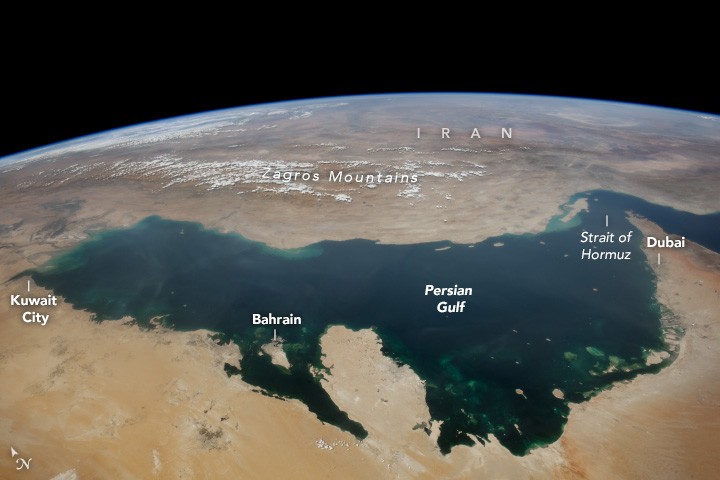
Hormuz traffic. CENTCOM's Cooper said on Sunday that more than 3,000 commercial vessels have crossed Hormuz with U.S. support over six months. "Today, primary transit routes in the Strait of Hormuz remain free and clear of Iranian sea mines," he said, according to Al Arabiya. Gulf News reports nearly 500 vessels waiting outside the strait.
Oil spill. Satellite analysis by Orbital Risk Intelligence identified the tanker Gem No. 2 as the source of a spill off the UAE, Reuters reported via Arab News. A Conflict and Environment Observatory researcher estimated the slick at about 160 square kilometers. Who struck the tanker on Oct. 9 has not been confirmed. Confidence in the spill's extent is moderate; attribution is low.
Geopolitical Players
Saudi Arabia, Pakistan and Turkey are bound by the Mecca pact, which commits them to assist each other against threats. Turkey's parliament has not yet ratified it.
Iran will reopen Hormuz if the U.S. lifts its naval blockade, its ambassador to Pakistan said. Foreign Minister Abbas Araghchi said management of the strait "will not return to pre-war norms," according to Gulf News.
Russia. Pezeshkian is due in Moscow to meet President Vladimir Putin, Araghchi said.
Israel. Prime Minister Benjamin Netanyahu warned Iran and its proxies against disrupting Tuesday's election, CBS News reported: "Don't test us. You will suffer disproportionate blows."
Qatar co-mediates with Pakistan, and the UAE has condemned the Houthi attacks on Saudi Arabia, Gulf News reported.
What It Means for the United States
Benefits and opportunities
- Analysis: talks led by three U.S. partners, including NATO ally Turkey, could open a channel to Tehran that Washington can use without making concessions directly.
- CENTCOM's escort operation continues to move oil; Cooper said more than 1.5 billion barrels have been exported with U.S. support since summer.
- A Saudi-Iran de-escalation would reduce threats to U.S. forces in the region and to Americans in Saudi Arabia, where the State Department has ordered some diplomats' families out.
Risks and dangers
- A regional framework that excludes "foreign powers," as Tehran describes it, could weaken U.S. influence over Gulf security.
- Oil near $115 a barrel keeps pressure on U.S. gasoline prices ahead of the midterms.
- U.S. intelligence has warned of Iranian plots against Americans, as we reported Sunday; a collapse in talks could raise that threat.
- New U.S. strikes during the talks could embarrass the Saudi, Pakistani and Turkish mediators.
Get the full Intel Briefing. Pro Truth Seeker members get the daily Intel Briefing and members-only deep dives on the Iran war. Become a member.
What's Next
- Oct. 26: Watch for readouts from Saudi, Pakistani, Turkish and Iranian officials.
- Oct. 27: Israel's general election.
- Oct. 28: U.S. Federal Reserve rate decision (see our Fed preview).
- This week: Pezeshkian expected in Moscow to meet Putin.
- Nov. 3: U.S. midterm elections.
Watch Brendan's breakdown on Ecker Geopolitics and support the Information War.
Sources
- ThePrint/Reuters: Officials from Mecca pact countries to meet Iranian officials on Monday — Oct. 26, 2026
- Anadolu: Senior Turkish, Saudi, Pakistani officials to visit Iran for security talks — Oct. 26, 2026
- CBS News: Live updates, Trump weighing deal with Iran — Oct. 26, 2026
- Türkiye Today: Mecca pact officials head to Tehran — Oct. 26, 2026
- Rigzone/Bloomberg: Saudi, Turkish Officials Travel to Iran to Cool Tensions — Oct. 26, 2026
- Al Jazeera: Officials from Mecca pact states to hold talks in Iran — Oct. 26, 2026
- Arab News: Coalition destroys Houthi missile launchers in Sanaa — Oct. 26, 2026
- Asharq Al-Awsat: Coalition Destroys Houthi Missile Tunnels and Launch Platforms — Oct. 26, 2026
- Gulf News: Trump rules out Iran strike; 2 injured — Oct. 26, 2026
- Gulf News: What UAE residents need to know today, Oct. 26 — Oct. 26, 2026
- Al Arabiya: CENTCOM chief visits Hormuz Strait — Oct. 25, 2026
- House of Saud: Iran Fires Cruise Missile at Vessel in Hormuz; Launcher at Sirik Struck — Oct. 26, 2026
- Arab News/Reuters: Oil spill off UAE coast prompts beach closures — Oct. 23, 2026
- Al Jazeera: Turkiye moves to ratify Mecca defence pact — Oct. 20, 2026
- ANI: Iranian President Pezeshkian to meet Putin in Moscow next week — Oct. 24, 2026
- L'Orient Today: 'Do I make a deal with them or do I finish them off?' — Oct. 25, 2026
- ThePrint/Reuters: Officials from Mecca pact countries to meet Iranian officials in Tehran — Oct. 26, 2026
- NASA Earth Observatory: Eight Countries, One Photo — March 10, 2024